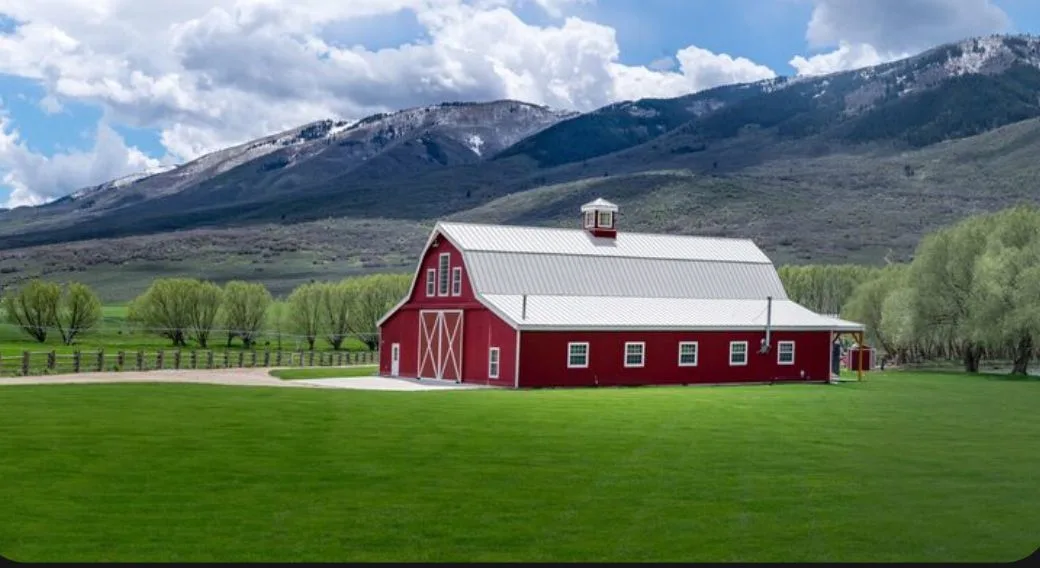
Introduction to Class Q Barn Conversion UK
The transformation of rural agricultural buildings into stylish and practical homes is increasingly popular across the United Kingdom. Thanks to the introduction of Class Q permitted development rights in England, landowners, developers, and those longing for a countryside lifestyle now have a route to convert barns without facing some of the hurdles of traditional planning. But what exactly does a Class Q barn conversion UK involve? How do you navigate planning, what are the criteria, and what should you prepare for during your project? Whether you’re exploring conversion for investment or as your future home, this comprehensive guide delves into everything you need to know.
What is Class Q Barn Conversion?
Class Q refers to a specific permitted development right introduced by the UK Government in 2014, which allows the conversion of agricultural buildings into residential dwellings without the need for full planning permission. This is part of the Town and Country Planning (General Permitted Development) (England) Order 2015, Schedule 2, Part 3, Class Q. In short, Class Q enables you to change the use of a qualifying agricultural building and some associated operational development to create up to five individual homes on a single agricultural unit. This framework has opened up new possibilities for transforming disused and redundant barns into stunning rural residences.
Why Choose a Class Q Barn Conversion UK?
The appeal of a Class Q barn conversion UK scheme is substantial. First, it provides a practical solution for utilising redundant or obsolete farm buildings, injecting new life into the countryside. Second, the process can be faster and less expensive than applying for full planning consent. Third, conversions frequently offer unique architectural features, often impossible to recreate in new builds, while preserving and enhancing the rural character. Furthermore, barn conversions frequently command significant resale values, especially in desirable areas.
Key Criteria for Class Q Barn Conversion UK
Not every barn or outbuilding qualifies for conversion under Class Q. There are strict eligibility rules set out in legislation and confirmed by numerous planning appeal decisions. The main requirements are as follows:
- Use as an Agricultural Building: The building must have been used solely for agriculture as part of an established agricultural unit on or before 20th March 2013.
- No Recent Agricultural Tenancies: If the site has been under an agricultural tenancy, the landowner may need written consent from the tenant.
- Site Restrictions: Locations in designated areas such as National Parks, Areas of Outstanding Natural Beauty (AONB), conservation areas, SSSIs, and World Heritage Sites are generally excluded.
- Structural Suitability: The proposed works must involve conversion, not a rebuild. Only necessary works for conversion (e.g. windows, doors, roof repairs) are permitted, not structural alterations beyond what is needed for conversion.
- Size Limits: You can convert up to 865 square meters of floorspace in total on one holding. The development can create up to five homes, and each can be up to 465m².
The Application Process: Prior Approval for Class Q
Unlike conventional planning, a Class Q barn conversion UK does not require “full” planning permission; instead, you must apply to the local authority for prior approval. The process includes:
- Submit Prior Approval Application: This involves providing drawings, structural reports, ecological surveys, and detailed supporting documents showing compliance with Class Q requirements.
- Consultation Period: The local authority will advertise the application locally, seeking comments from local residents and statutory bodies for 21 days.
- Assessment: The council will review whether your scheme meets Class Q criteria, including transport/highway impacts, noise, contamination, flood risk, and the practicality of conversion without significant rebuilding.
- Decision within 56 Days: If the authority has not issued a decision in 56 days, approval is deemed granted, unless an extension is agreed.
If approval is granted, it is typically subject to conditions (such as specifying materials or further surveys). If refused, a robust appeal mechanism allows you to challenge the decision.
Essential Documents for a Successful Application
Submitting a robust set of documents is key to a positive Class Q barn conversion UK outcome. Recommended submissions include:
- Existing and proposed floor plans, elevations, and site location plans drawn to scale.
- A thorough structural survey/assessment (by a chartered structural engineer).
- Transport, highways, and accessibility statement (if relevant).
- Flood risk assessment if the site is in a flood zone.
- Contamination risk assessment (where necessary).
- Ecology/Bat/Great Crested Newt surveys as appropriate.
- Supporting statement explaining how the proposal addresses Class Q criteria and relevant national and local policies.
- Details of any proposed operations: window/door insertions, new roof, and insulating or repairing walls/floors.
Understanding “Conversion vs. Rebuild”: Key Legal Decisions
Many Class Q barn conversion UK refusals arise because the council considers the proposal a ‘rebuild’ rather than a ‘conversion’. The law is clear that only bona fide conversion is allowed; significant structural works which amount to new build will disqualify you. Various planning appeal decisions and High Court cases (notably Hibbitt v. SSCLG 2016) have clarified that the existing structure must be “capable of functioning as a dwelling” without new structural elements. Loading new foundations or replacing the entire frame (except minimal repairs) will likely make your scheme ineligible.
Design Considerations for Class Q Barn Conversion UK
While Class Q focuses on the principle of development, achieving a beautiful, functional home is equally important. Some key design considerations include:
- Celebrate the Original Structure: Retain original barn features, open vaulted ceilings, exposed beams, and brick or stonework. These elements make barn conversions unique.
- Light and Views: Insert new glazing thoughtfully, ensuring you meet the restrictions on “reasonable necessary for conversion” and do not radically alter the building’s silhouette.
- Thermal Performance: Barns are not built for habitation, so consider super-insulation, airtightness, and underfloor heating for comfort and energy efficiency.
- Layout Planning: Take advantage of open plan spaces and consider how to add bedrooms or mezzanine floors without compromising the character.
- External Appearance: Use sympathetic materials for any required repairs or new elements—local stone, natural slate, timber cladding etc.
- Landscaping: Enhance the site with sensitive landscaping and natural planting to integrate the home into its rural setting.
Local Authority Objections & How to Overcome Them
While the government’s intention is to encourage rural conversion, some councils can be resistant. Common reasons for refusal include:
- Asserting the proposal is more than conversion (“new build” argument).
- Questions over previous agricultural use and date of first use.
- Concerns over highway safety or inadequate access.
- Flood risk, contamination, or impact on protected species.
- Visual impact if the barn is prominent in the landscape.
You can maximise your chances by commissioning professional reports, seeking pre-application advice, and providing thorough evidence on legal use, structure, and design harmony.
Building Regulations and Other Consents
Although Class Q barn conversion UK projects don’t require full planning consent, building regulations approval is mandatory for all works to ensure they meet health, safety, structural, energy efficiency, and accessibility standards.
Bringing Your Class Q Barn Conversion to Life
A successful Class Q barn conversion UK project offers a rare opportunity to transform redundant agricultural buildings into unique, high-value homes while benefiting from a streamlined permitted development route. However, despite avoiding full planning permission, the process is far from simple. Strict eligibility rules, detailed prior approval requirements, and the critical distinction between “conversion” and “rebuild” mean that every stage must be carefully managed.
From proving lawful agricultural use and meeting structural suitability tests to addressing transport, ecology, and flood risk considerations, a well-prepared application is essential. Councils closely scrutinise Class Q schemes, and even minor oversights can lead to refusal or costly delays.
With the right design approach, strong technical evidence, and expert planning strategy, however, Class Q can unlock exceptional potential for both residential development and long-term investment.
At Planning Build, we specialise in helping clients successfully navigate Class Q barn conversion UK projects from initial feasibility assessments and site appraisals to preparing robust prior approval applications and supporting documentation. Our expertise ensures your proposal is not only compliant but strategically positioned for approval.
Planning a barn conversion? Contact Planning Build today for expert guidance and tailored support to turn your agricultural building into a stunning home with confidence.