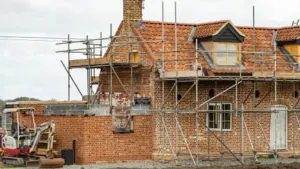
If you are considering developing a site but are not ready to finalise every detail, outline planning permission can provide a way to establish whether the principle of your proposed development is acceptable.
Unlike full planning permission, an outline application does not necessarily determine every detail of the development at the initial stage. Certain details, known as reserved matters, can be submitted for approval later.
This approach can be useful for landowners and developers who want to understand whether a development is acceptable in principle before investing in the full design and detailed planning process.
What Is Outline Planning Permission?
Outline planning permission is used to establish the general principles of how a site can be developed.
GOV.UK describes an outline application as a way of obtaining a decision on the general principles of development, with one or more reserved matters dealt with at a later stage.
For example, an applicant may seek outline permission for residential development on a site before the precise appearance, layout and landscaping have been finalised.
The outline application still needs to provide enough information for the local planning authority to understand what is being proposed. It is not simply an application asking whether a site can be developed without providing any details.
When Is Outline Planning Permission Used?
Outline planning permission can be useful where the applicant wants to establish the principle of development before committing to the full details.
It is particularly relevant to larger or more complex development proposals, including:
- Residential development
- Commercial development
- Mixed-use development
- Development of larger sites
- Land where the principle of development needs to be established before detailed design work
- Multi-phase developments
For some projects, establishing whether a site can accommodate a particular type or amount of development can help inform investment and design decisions.
However, outline planning permission is not automatically the best option for every development. The appropriate application type depends on the site, the proposal and what the applicant needs to establish.
What Does an Outline Planning Application Cover?
An outline application must contain enough information for the local planning authority to understand the proposed development.
This includes information about the proposed use or uses and the amount of development proposed for each use. The application must also indicate where access points to the development will be situated, even where access is being reserved for later approval.
Depending on the proposal, the application may include plans and information setting out the parameters within which the future development would need to be designed.
The level of detail will depend on what is being reserved and the circumstances of the site.
What Are Reserved Matters?
Reserved matters are details that are left to be approved after outline planning permission has been granted.
The main reserved matters can include:
- Access – how vehicles, pedestrians and cyclists will access and move through the site
- Appearance – the external appearance of buildings and the development
- Landscaping – the treatment of the site and surrounding areas
- Layout – how buildings, spaces and routes are arranged
- Scale – the size and dimensions of the proposed development
These are recognised as the principal reserved matters under the planning system.
Not every matter has to be reserved. An applicant can choose to submit details of some matters with the outline application.
The outline decision notice will identify which matters have been reserved for later approval.
Outline Planning Permission vs Full Planning Permission
The main difference between outline and full planning permission is the level of detail decided at the initial application stage.
Outline planning permission
An outline application establishes the principle and general parameters of development, with specified details dealt with later through reserved matters.
Full planning permission
A full application provides the detailed proposal for consideration at the application stage, including matters such as layout, appearance, scale and access where relevant.
This means outline permission can offer more flexibility at the early stage, while full planning permission provides a decision on the detailed proposal.
GOV.UK identifies full and outline planning permission as the two main types of planning application.
The right approach will depend on the objectives of the project and how much detail is ready to be agreed.
What Are the Benefits of Outline Planning Permission?
One potential benefit of an outline application is that it can allow the principle of development to be established before all detailed design work has been completed.
This can be particularly useful where a landowner or developer needs greater certainty about whether a proposed use or level of development is acceptable before progressing to detailed design.
Outline planning can also provide some flexibility where the final design has not yet been determined.
However, this flexibility does not mean that the future development can change without limits. The reserved matters proposal must remain consistent with the outline permission and any conditions attached to it.
What Information Is Required?
The information required for an outline planning application depends on the development and the matters being reserved.
At a minimum, the application needs enough information for the planning authority to understand the proposed development.
This can include:
- Location plans
- Site plans
- The proposed use or uses
- The amount of development proposed
- Access information
- Site parameters
- Supporting planning information
- Environmental or technical assessments where required
The planning authority may also require further details where they consider that the information provided is insufficient to determine the outline application.
For larger developments, additional information may be needed to address issues such as highways, ecology, flood risk, landscape, heritage or infrastructure.
What Happens After Outline Planning Permission Is Granted?
Outline planning permission does not normally give you permission to start building the development.
If matters have been reserved, you need to submit an application for approval of those reserved matters before development can proceed. The details submitted must be consistent with the outline approval and its conditions.
The reserved matters application then deals with the details that were not determined at the outline stage.
For example, if the outline permission establishes the principle of residential development and reserves appearance, layout, landscaping and scale, those matters will need to be approved before development can proceed.
How Long Do You Have to Submit Reserved Matters?
Under the standard rules, reserved matters applications normally need to be made within three years of the grant of outline planning permission, unless the permission specifies a different period.
The outline permission will set out the relevant time limits and conditions, so the decision notice should always be checked carefully.
Planning Portal guidance states that development must then commence within the applicable period following approval of the reserved matters.
Because the exact conditions attached to an outline permission matter, it is important to understand the decision notice before progressing to the next stage.
What Happens If Your Proposal Changes?
The reserved matters application must remain within the scope of the outline permission.
If the proposed development changes significantly from what was approved at outline stage, the reserved matters application may not be sufficient.
Planning Portal guidance explains that where proposals have changed, a new outline or full planning application may be necessary depending on the nature of the changes.
This is one reason why the wording, plans, parameters and conditions attached to the original outline permission need to be considered carefully.
Is Outline Planning Permission Right for Your Project?
Outline planning permission can be useful when the principle of development is the main issue you need to establish before progressing to detailed design.
It may be worth considering if:
- You are developing a larger site
- The final design is not yet established
- You want to establish the principle of a proposed use
- You need to assess the viability of a development
- You are considering phased development
- You want to establish development parameters before detailed design
For a relatively straightforward project where the design is already established, a full planning application may be more appropriate.
The best route depends on the specific development, planning history and site constraints.
Get Advice on Outline Planning Permission
Choosing between outline and full planning permission can affect how your development is planned and what needs to be submitted at each stage.
Planning Build can help you assess your proposed development, understand the appropriate planning route and identify the information needed to move your project forward.
This can be particularly useful for landowners and developers considering new residential, commercial or mixed-use development where establishing the principle of development is an important early step.
Explore Planning Build’s planning application services or contact the team to discuss your project.