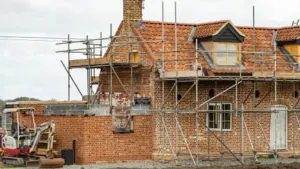
If development has already taken place without the required planning permission, you may be able to apply for retrospective planning permission to regularise the development.
This can apply where work has already been completed, or where development has started without the necessary planning approval. A retrospective planning application is assessed by the local planning authority in much the same way as an application made before development begins.
However, submitting a retrospective application does not guarantee that permission will be granted. The authority will consider the development against relevant planning policies and other material considerations, so understanding your position before making an application is important.
What Is Retrospective Planning Permission?
Retrospective planning permission is an application made after development has already taken place without the required planning permission.
It can be used to seek approval for development that has already been carried out, rather than obtaining permission before the work starts.
For example, you may need to consider retrospective planning permission if you have:
- Built an extension without planning permission
- Constructed an outbuilding or other structure
- Changed the use of a property or land
- Carried out development that goes beyond permitted development rights
- Made alterations that required planning permission
The fact that work has already been completed does not mean that planning rules no longer apply.
When Might You Need Retrospective Planning Permission?
Retrospective planning permission may be relevant when development has taken place and you subsequently discover that planning permission was required.
This can happen for several reasons. A property owner may have assumed that work fell under permitted development, misunderstood the restrictions applying to the property or carried out work without checking the planning position first.
It can also become an issue when selling or refinancing a property, particularly if questions are raised about previous alterations or changes of use.
Before applying, it is important to establish whether planning permission was actually required.
Some development may benefit from permitted development rights, while other development may be lawful because sufficient time has passed for enforcement action to be restricted. These situations require careful assessment rather than automatically assuming that a retrospective application is necessary.
Can You Apply for Planning Permission After Building Work Has Started?
Yes. A planning application can be made after development has begun or been completed where the development required planning permission.
However, retrospective applications should not be viewed as a way to bypass the normal planning process.
The local planning authority will assess the development on its planning merits. This means that permission can be refused if the development is considered unacceptable.
If enforcement action has already started, the situation can become more urgent. GOV.UK advises that if you have been served with an enforcement notice, you should follow the requirements and deadlines in the notice. (gov.uk)
How Does Retrospective Planning Permission Work?
The process is broadly similar to making a planning application before development takes place.
1. Establish the planning position
The first step is to determine whether the development required planning permission in the first place.
This may involve reviewing the work carried out, the property’s planning history, permitted development rights and any restrictions affecting the site.
2. Assess the existing development
You need to understand exactly what has been built or what use has been introduced.
Accurate measurements, drawings and photographs can help establish what the local planning authority is being asked to approve.
3. Prepare the application
The application should accurately describe the development as it exists.
Depending on the project, this can include:
- Location and site plans
- Existing and proposed floor plans
- Elevations
- Site photographs
- Design information
- Planning statements
- Other supporting documents or assessments
The information required will depend on the development and the requirements of the relevant local planning authority.
4. Submit the application
The retrospective planning application is submitted to the relevant local planning authority with the required fee and supporting information.
5. Assessment and consultation
The authority will assess the proposal against relevant planning policies and material considerations.
Neighbours and other consultees may also have an opportunity to comment, depending on the nature of the development.
6. Decision
The authority can grant planning permission, potentially subject to conditions, or refuse the application.
Is Retrospective Planning Permission Guaranteed?
No.
This is one of the most important things to understand before applying.
A retrospective application is not automatically approved because the development has already been completed.
The local planning authority can assess the development in planning terms and refuse permission if it considers that the development is unacceptable.
Factors that may be relevant include:
- The scale and design of the development
- Its effect on neighbouring properties
- The character of the surrounding area
- Access and parking
- The use of the property or land
- Local planning policies
- Heritage considerations
- Flood risk
- Ecology
- Other site-specific considerations
If the development has created a planning problem, submitting an application without addressing the underlying issues may not resolve the situation.
What Happens If Retrospective Planning Permission Is Refused?
If retrospective planning permission is refused, the next steps depend on the circumstances.
You may be able to:
- Appeal the planning decision
- Submit a revised application
- Modify or remove part of the development
- Comply with an enforcement notice where one has been issued
If an enforcement notice is involved, it is particularly important to understand the requirements and deadlines set out in the notice.
An appeal may also be possible in certain circumstances. GOV.UK provides an appeal process for applicants who have been refused planning permission or who disagree with certain planning decisions.
Professional planning advice can help you assess the available options before deciding what to do next.
Retrospective Planning Permission vs Lawful Development Certificate
Retrospective planning permission should not be confused with a lawful development certificate.
They deal with different questions.
A retrospective planning application asks the local planning authority to grant planning permission for development that has already taken place.
A lawful development certificate, on the other hand, is used to establish whether an existing or proposed use or development is lawful under planning legislation.
For example, where an existing development has become immune from enforcement because of the passage of time, the appropriate route may be a lawful development certificate rather than retrospective planning permission.
The correct approach depends on the circumstances, including when the development took place and whether it was lawful at the relevant time.
How Long Does Retrospective Planning Permission Take?
The timescale will depend on the type and complexity of the application and the local planning authority.
Once a valid application has been submitted, the authority will assess it within the applicable determination period. Some applications can take longer where additional information is required or where an extension of time is agreed.
It is therefore better to resolve the planning position as early as possible rather than waiting until a problem arises during a property sale, enforcement process or other transaction.
How Can You Avoid Retrospective Planning Issues?
The easiest way to avoid needing retrospective planning permission is to establish the planning position before starting development.
Before beginning work, consider:
- Whether your proposal constitutes development.
- Whether planning permission is required.
- Whether permitted development rights apply.
- Whether the property is affected by local restrictions.
- Whether previous planning permissions or conditions affect the site.
- Whether other approvals, such as building regulations approval, are required.
Where there is uncertainty, getting professional planning advice before construction begins can help identify potential problems while there is still an opportunity to change the proposal.
Get Help With Retrospective Planning Permission
If development has already taken place without planning permission, it is important to establish your options before taking further action.
Planning Build can help you assess the planning position, understand whether retrospective planning permission may be appropriate and prepare for the planning application process.
Whether you have built an extension, changed the use of a property, developed land or carried out another form of development without prior permission, getting professional advice can help you understand what needs to happen next.
Explore Planning Build’s planning application services or contact Planning Build to discuss your situation.