Temporary structures are used across a wide range of projects, from construction sites and commercial premises to events, schools and community facilities. They provide additional space or facilities without necessarily requiring a permanent building.
Common examples include marquees, modular buildings, site offices, temporary classrooms, exhibition structures, storage buildings, stages and other demountable installations.
However, deciding what is classed as a temporary structure is not simply a matter of whether something can be dismantled or moved. In planning terms, the circumstances of the development matter, including its purpose, duration, location, physical characteristics and use of the land.
The term “temporary structure” is also used differently across planning and building control contexts. Certain permitted development rights specifically cover temporary buildings, structures and uses, while some local building control regimes have their own requirements for temporary or special structures.
Understanding how a proposed structure is classified can, therefore, help establish whether planning permission, Building Regulations approval or another form of consent may be required.
Planning Build can help property owners, developers and businesses assess their proposals, understand the relevant planning requirements and determine the appropriate route before work begins.
What Is Classed as a Temporary Structure?
A temporary structure is generally a building, installation or other physical structure intended to remain in place for a limited period rather than as a permanent addition to the site.
Examples can include:
- Marquees
- Temporary offices
- Modular buildings
- Site cabins
- Temporary classrooms
- Exhibition pavilions
- Event structures
- Temporary storage buildings
- Stages
- Grandstands
- Canopies
- Temporary hospitality facilities
The important point is that “temporary” does not automatically mean “exempt from planning permission”.
Planning legislation contains specific provisions for certain temporary structures and uses. For example, permitted development rights can allow temporary buildings, structures, works, plant or machinery where they are required in connection with operations being carried out on land and for the duration of those operations.
There are also provisions covering certain temporary uses of land, including the well-known 28-day permitted development right. However, that right applies to specified circumstances and should not be treated as a general definition of every temporary structure.
Common Examples of Temporary Structures
Temporary structures can be used for very different purposes, so the type and intended use should be considered when assessing a proposal.
Marquees and Event Structures
Marquees are among the most recognisable examples of temporary structures.
They can be installed for:
- Weddings
- Festivals
- Corporate events
- Exhibitions
- Sporting events
- Hospitality
- Markets
- Community events
They are generally designed to be erected, used and dismantled rather than remaining permanently on a site.
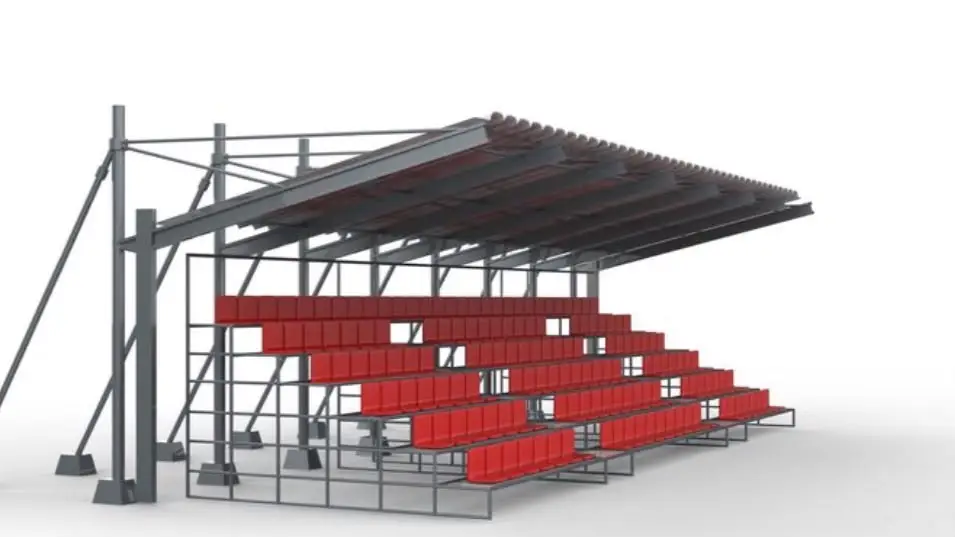
Other event structures can include stages, grandstands, temporary seating, hospitality areas and exhibition structures.
For larger public events, structural safety and building control considerations may also apply. Some local authorities have specific requirements for temporary structures such as marquees, grandstands and stages.
Temporary Offices
Temporary offices can provide additional workspace while a business expands, relocates, refurbishes its premises or develops a permanent facility.
They can range from simple portable cabins to more substantial modular buildings.
Although a temporary office may be capable of being removed, its planning position depends on factors such as its location, intended duration and use.
Site Accommodation
Construction and development projects often require temporary buildings for:
- Site offices
- Welfare facilities
- Storage
- Security
- Staff facilities
- Equipment
- Temporary workshops
Specific permitted development rights can apply to temporary buildings and structures required in connection with certain operations on land.
The connection between the structure and the underlying development is therefore important.
Temporary Classrooms
Schools and educational establishments may use modular classrooms when additional accommodation is required.
For example, a school might need additional space while a permanent extension is being designed or constructed.
Temporary educational buildings can remain in place for longer than structures used for a single event, so the relevant planning permission or permitted development right should be established before installation.
Temporary Storage Buildings
Businesses may use temporary storage structures to increase capacity during periods of increased demand or while permanent facilities are being developed.
These can include:
- Storage tents
- Industrial shelters
- Covered storage areas
- Modular storage buildings
- Temporary warehouses
The fact that a structure is used for storage does not automatically determine its planning status. The size, duration, location and use of the land can all be relevant.
How Is a Temporary Structure Classified?
There is no single physical feature that automatically determines whether something is a temporary structure.
Instead, several factors can be relevant.
Intended Duration
How long the structure is expected to remain on the site is an important consideration.
A structure installed for a weekend event is clearly temporary in nature. A modular building intended to remain for several years requires a more careful assessment.
Importantly, there is no universal rule that every structure becomes permanent after 28 days.
The 28-day period comes from specific permitted development provisions concerning certain temporary uses of land. It should not be treated as a blanket planning definition.
Purpose
The reason for installing the structure can also affect its planning position.
A temporary building used during construction may be treated differently from a structure installed to operate a long-term commercial business.
Relevant purposes may include:
- Construction
- Events
- Seasonal activities
- Temporary accommodation
- Business expansion
- Refurbishment
- Emergency use
- Trial uses
- Community activities
Physical Characteristics
The construction of the structure can also be relevant.
Temporary structures are often:
- Lightweight
- Modular
- Demountable
- Relocatable
- Constructed from prefabricated components
However, being removable does not automatically mean that planning permission is unnecessary.
A substantial modular building can have a significant effect on land use even if it could technically be dismantled and relocated.
Relationship With the Land
How the structure interacts with the site can also matter.
Consider whether it:
- Has foundations
- Is connected to utilities
- Requires permanent access
- Occupies a significant area
- Changes the appearance of the site
- Affects parking or circulation
- Alters how the land is used
These factors can help determine the planning implications of the proposal.
Does a Temporary Structure Need Planning Permission?
A temporary structure may require planning permission.
The fact that it is described as temporary does not automatically remove the need for consent.
Planning permission may be required where the development does not fall within an applicable permitted development right or where the conditions and limitations of that right are not met.
Planning authorities consider whether a proposal amounts to development and whether an existing permitted development right applies.
Historic England explains that planning permission is required for activities that amount to “development”, which can include building, engineering or other operations and material changes of use. Whether something constitutes development can depend on the facts and circumstances of the individual proposal.
This means that the correct approach is to assess the actual structure and its proposed use rather than relying solely on the word “temporary”.
Understanding the 28-Day Rule
The 28-day rule is often misunderstood.
Under Class B of Part 4 of the permitted development regime, certain temporary uses of land are permitted for no more than 28 days in total in any calendar year, subject to specific limitations. The provision also covers the placement of movable structures for the permitted use.
This does not mean that every temporary structure can be erected for 28 days without planning permission.
The rule applies to particular uses and circumstances.
For example, restrictions can apply to the type of land and the purpose for which it is being used.
Other permitted development rights cover different temporary structures. This is why it is important to identify the specific planning provision that applies rather than assuming that the 28-day rule covers the whole proposal.
Temporary Structures and Temporary Planning Permission
A structure can also be temporary because planning permission has been granted for it for a limited period.
Section 72 of the Town and Country Planning Act 1990 allows planning permission to be granted for a specified temporary period.
This can be useful where a development has a genuine temporary purpose, such as:
- Testing a proposed use
- Providing accommodation during construction
- Using vacant land before a longer-term development
- Providing temporary school facilities
- Supporting a short-term commercial requirement
Government guidance states that temporary permissions can be appropriate where planning circumstances are expected to change or where there is a clear reason for limiting the permission to a particular period.
Importantly, temporary permission does not automatically create an expectation that permanent permission will later be granted.
If a structure needs to remain beyond the approved period, a further planning application may be necessary.
Semi-Permanent Structures
Some buildings are described as semi-permanent because they are designed to remain in place for an extended period while still being capable of dismantling or relocation.
Examples include:
- Modular offices
- Modular classrooms
- Industrial storage buildings
- Temporary commercial units
- Healthcare facilities
- Large covered structures
The term “semi-permanent” does not have a single planning meaning that automatically determines whether permission is required.
A building that is physically relocatable may still function as a long-term building on the site.
For example, a modular office used continuously by a business for several years may require planning permission even though the building could theoretically be dismantled.
The intended use and duration should therefore be considered alongside the physical characteristics.
Temporary Structures and Building Regulations
Planning permission and Building Regulations are separate requirements.
Planning permission considers whether a development is acceptable in its location, while Building Regulations focus on technical requirements relating to the construction and safety of buildings.
Depending on the structure, Building Regulations can address matters such as:
- Structural stability
- Fire safety
- Ventilation
- Accessibility
- Drainage
- Sanitation
- Energy efficiency
Some temporary buildings can fall within specific Building Regulations exemptions depending on their circumstances and intended duration.
However, an exemption from Building Regulations does not automatically mean that planning permission is unnecessary.
The two systems should therefore be considered separately.
There can also be specific local requirements. For example, some London boroughs operate procedures for temporary structures under the London Building Acts, including certain marquees, grandstands, masts and other independent structures.
Temporary Structures in Different Locations
Where a temporary structure is installed can have a significant effect on the planning position.
Additional considerations may arise when a proposal is located:
- Within a conservation area
- Near a listed building
- On Green Belt land
- Within a protected landscape
- Near residential properties
- On environmentally sensitive land
- Close to a highway
- On land with existing planning restrictions
A temporary structure can still have visual, environmental, traffic or amenity impacts.
Historic England notes that temporary structures in historic places need to be considered in relation to their potential effect on heritage assets and the surrounding environment.
Common Mistakes When Installing Temporary Structures
Assuming ‘Temporary’ Means ‘Exempt’
This is one of the biggest mistakes.
A temporary structure can still constitute development and may require planning permission.
Assuming Everything Falls Under 28 Days
The 28-day provision only applies to specific temporary uses and conditions.
It is not a universal allowance for all temporary structures.
Focusing Only on the Structure
The use of the land can be just as important as the building itself.
A temporary structure used for a new commercial activity may involve a change of use that requires separate planning consideration.
Ignoring the Intended Duration
Calling something temporary does not remove the need to establish how long it will actually be required.
A structure intended to remain for several years needs to be assessed differently from one installed for a weekend.
Installing Before Checking the Planning Position
Installing a structure first and investigating planning requirements later can create unnecessary risks.
If planning permission is required but has not been obtained, enforcement action may become an issue.
How Planning Build Can Help
If you are unsure what is classed as a temporary structure for your particular project, professional planning advice can help clarify the position before you commit to installation.
Planning Build can assist with the following:
- Planning permission advice
- Planning feasibility assessments
- Planning strategy
- Planning applications
- Architectural design
- Building Regulations compliance
- Planning appeals
The team can assess the proposed structure, its intended use, duration and location to help establish the appropriate planning route.
This can be particularly useful for businesses, developers and landowners considering modular buildings, temporary offices, storage structures, event facilities or other installations.
Frequently Asked Questions
What is classed as a temporary structure?
Temporary structures can include buildings and installations intended to remain for a limited period, such as marquees, modular buildings, temporary offices, site cabins, classrooms, event structures and storage buildings. However, the planning classification depends on the circumstances rather than simply the structure’s name.
Is a temporary structure automatically exempt from planning permission?
No. Some temporary structures and uses benefit from permitted development rights, but these rights are subject to specific conditions and limitations.
Is 28 days the maximum time a temporary structure can remain?
No. The 28-day period applies to specific permitted development rights for temporary uses of land. Other structures may be authorised for different periods through other permitted development rights or temporary planning permission.
Can a modular building be classed as a temporary structure?
Yes, a modular building can be temporary in nature, particularly where it is designed to be relocated or used for a limited period. However, being modular does not automatically remove planning requirements.
Do temporary structures need Building Regulations approval?
Some temporary structures may benefit from specific exemptions, while others may require Building Regulations approval. The requirements depend on the structure and its intended use and duration.
Planning a Temporary Structure
Knowing what is classed as a temporary structure is only the starting point. The planning position depends on what the structure is, how it will be used, where it will be located and how long it is intended to remain.
Temporary structures can provide an efficient and flexible solution for businesses, events, construction projects, schools and other organisations. However, they should not be treated as automatically exempt from planning requirements.
If you are considering a temporary office, modular building, event structure, storage facility, classroom or another temporary installation, Planning Build can help you assess the planning implications and determine the appropriate route.
Explore Planning Build’s services or contact the team to discuss your project.