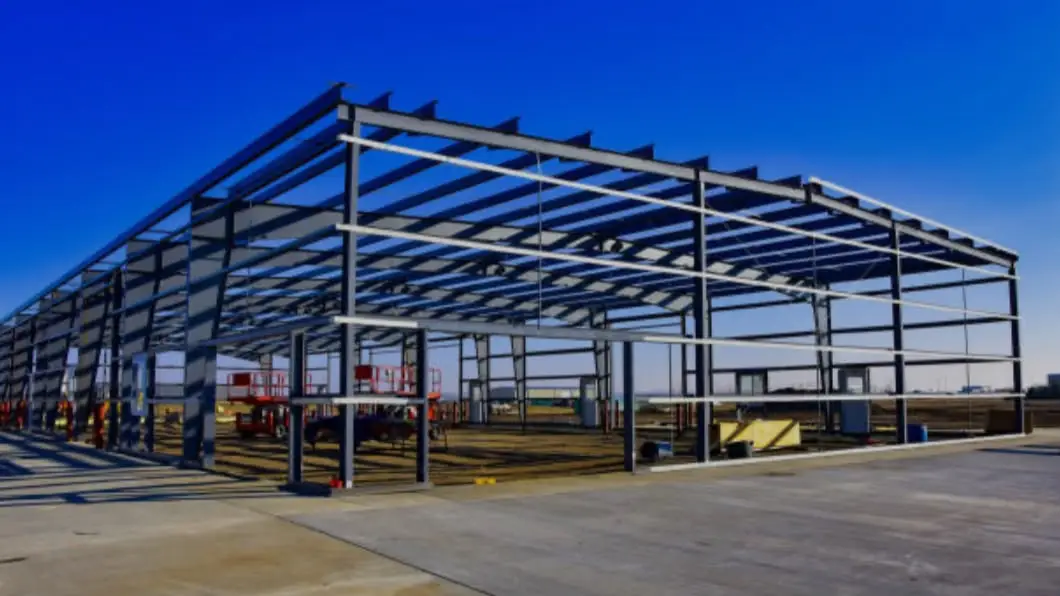
Non-permanent building structures provide a flexible way to create additional space without committing to a permanent building. They are commonly used for construction projects, businesses, schools, events and storage.
Examples include modular buildings, portable offices, temporary classrooms, site cabins, marquees and storage structures.
However, a building being removable or relocatable does not automatically mean that planning permission is unnecessary. The planning position depends on factors such as its intended use, location, size and how long it will remain on the site.
What Are Non-Permanent Building Structures?
Non-permanent building structures are buildings or installations designed to remain in place for a limited period or to be dismantled and relocated when they are no longer needed.
Common examples include:
- Modular offices
- Site cabins
- Temporary classrooms
- Storage buildings
- Marquees
- Event structures
- Temporary workshops
- Exhibition buildings
- Welfare facilities
Some structures may only be required for a few days or weeks, while others can remain for months or years.
The fact that a structure can be dismantled does not, by itself, determine its planning status. A modular building that remains in continuous use for an extended period may still require planning permission.
Common Uses of Non-Permanent Buildings
Non-permanent structures are used across a variety of sectors.
Construction: Temporary offices, welfare facilities, storage and security cabins can support construction projects while permanent works are underway.
Education: Modular classrooms can provide additional accommodation while schools are being refurbished or permanent extensions are constructed.
Business: Companies may use temporary offices, storage or workshops during expansion, refurbishment or relocation.
Events: Marquees, stages, exhibition structures and hospitality facilities can provide temporary accommodation without creating permanent buildings.
Planning Permission for Non-Permanent Structures
A non-permanent building may require planning permission.
Certain permitted development rights allow temporary buildings and structures in specific circumstances. For example, Part 4 Class A covers certain temporary buildings, moveable structures, works, plant or machinery required in connection with operations being carried out on land.
Where the relevant conditions are satisfied, a temporary structure may benefit from permitted development rights rather than requiring a full planning application.
However, there is no general exemption for all non-permanent buildings.
The planning position should be assessed according to the individual proposal, including its purpose, location, duration and relationship with the land.
How Long Can a Non-Permanent Structure Stay?
There is no single time limit that applies to every non-permanent building.
The permitted duration depends on the planning route being used. Some permitted development rights contain specific time restrictions, while temporary planning permission can authorise a building for a period specified by the local planning authority.
The 28-day rule is also sometimes associated with temporary structures. However, it applies to specific temporary uses of land and is not a universal exemption for all non-permanent buildings.
The intended duration should therefore be established before the structure is installed.
Location and Planning Considerations
The location of a non-permanent building can affect its planning position.
Additional considerations may apply where a structure is proposed:
- In a conservation area
- Within the Green Belt
- Near a listed building
- Close to residential properties
- In a sensitive landscape
- Near a highway
The potential impact on neighbouring properties, views, access, parking and noise may also need to be considered.
The size and appearance of the structure are relevant too. A large modular building may have a greater visual or practical impact than a small temporary installation.
Non-Permanent Structures and Building Regulations
Planning permission and Building Regulations are separate requirements.
Planning permission considers whether a development is acceptable in its location and against relevant planning policies. Building Regulations deal with technical requirements relating to construction and safety.
Depending on the structure, Building Regulations may cover structural stability, fire safety, ventilation, accessibility, drainage and sanitation.
Some temporary buildings may benefit from specific Building Regulations exemptions, but this does not automatically remove the need to consider planning permission.
Both requirements should be assessed before installation.
Temporary Planning Permission
Where permitted development rights do not apply, a non-permanent building may require temporary planning permission.
A temporary planning application should explain:
- Why the building is required
- Why the development is temporary
- How long it will remain
- How it will be used
- Its impact on the surrounding area
- What will happen when the temporary period ends
If permission is granted, the local planning authority may impose a condition requiring the building to be removed or the use to cease by a specified date.
Temporary permission does not automatically mean that the building can later remain permanently.
What Happens When the Temporary Period Ends?
The future of a non-permanent building should be considered before installation.
If the structure is authorised for a specific period, it may need to be removed when that period expires. If the owner wishes to retain it, further planning permission may be required.
Similarly, if a temporary building was installed for construction purposes but remains after the project has finished, its continued use may need to be reassessed.
Planning for removal or future use from the beginning can help prevent unexpected planning issues.
How Planning Build Can Help
Planning requirements for non-permanent building structures vary depending on the proposal and site.
Planning Build can assess your proposed structure, its intended use, duration and location to help determine whether permitted development rights apply or whether planning permission is required.
Planning Build can support clients with planning permission, planning applications, feasibility advice and planning strategy, architectural design and Building Regulations compliance.
Getting professional advice before installation can help reduce the risk of delays, enforcement action and unnecessary costs.
Planning Non-Permanent Building Structures
Non-permanent buildings can provide valuable flexibility for construction projects, businesses, schools and events. However, being removable or relocatable does not automatically remove planning requirements.
The purpose, location, size, use and intended duration should all be considered before installation. Depending on the circumstances, permitted development rights may apply or planning permission may be required.
Planning Build can help assess your proposal and identify the appropriate planning route.
Explore Planning Build’s services or contact Planning Build to discuss your project.