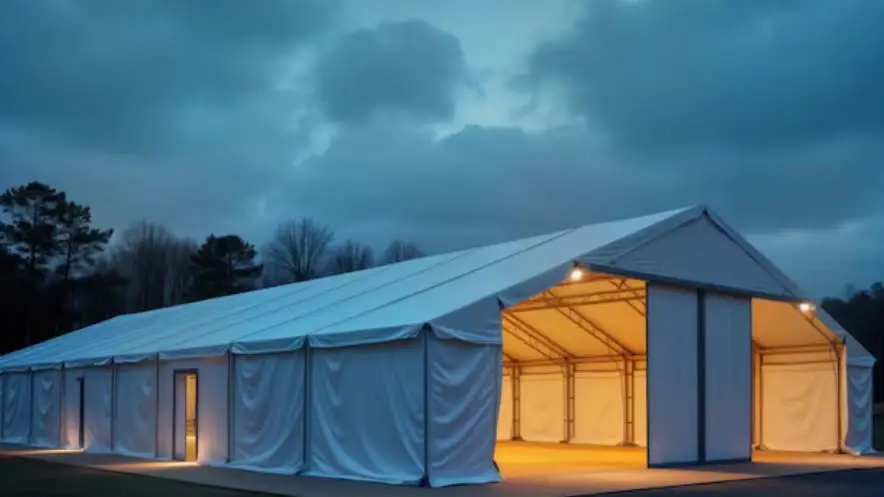
Temporary structures can provide a flexible solution for businesses, construction projects, schools, events and other organisations that need additional space for a limited period. From modular offices and temporary classrooms to marquees, storage buildings and site facilities, these structures can meet short-term needs without requiring a permanent building.
However, planning for temporary structures requires more than simply deciding where to place a building. The planning position can depend on the structure’s purpose, location, size, intended duration and how the land will be used.
Understanding these factors before installation can help you identify whether planning permission is required and avoid potential enforcement issues.
What Is a Temporary Structure?
A temporary structure is generally a building or installation intended to remain in place for a limited period.
Common examples include:
- Modular buildings
- Site offices and cabins
- Temporary classrooms
- Storage structures
- Marquees
- Event structures
- Temporary workshops
- Exhibition buildings
- Welfare facilities
A structure being removable does not automatically make it exempt from planning permission. A modular building that remains on a site for several years, for example, may still require planning permission depending on its use and circumstances.
The intended duration, physical characteristics and relationship with the land should all be considered when planning the development.
Planning Permission for Temporary Structures
Not every temporary structure requires a planning application. Certain permitted development rights allow specific temporary buildings, structures and uses in defined circumstances.
For example, Part 4 Class A covers certain temporary buildings, moveable structures, works, plant or machinery required in connection with operations being carried out on land. Where the relevant requirements are met, this can allow temporary facilities to support construction or other authorised operations without a standard planning application.
However, permitted development rights have specific conditions and limitations. They should not be treated as a general exemption for all temporary structures.
If no applicable permitted development right covers the proposal, planning permission may be required.
The 28-Day Rule
The 28-day rule is frequently associated with temporary structures, particularly those used for events.
Certain permitted development rights allow specified temporary uses of land for no more than 28 days in total in any calendar year, subject to conditions and limitations.
However, this does not mean that every temporary structure can automatically be installed for 28 days without planning permission.
The rule applies to particular temporary uses of land. Other structures may be subject to different permitted development rights or require planning permission.
When planning a temporary structure, it is therefore important to establish which planning provision applies rather than relying on the 28-day period alone.
Factors to Consider When Planning a Temporary Structure
Several factors can affect the planning position.
Location
The location of the structure can influence the planning assessment. Additional considerations may apply where a proposal is located in a conservation area, Green Belt, near a listed building or within another sensitive area.
The relationship with neighbouring properties should also be considered, particularly where the structure could affect privacy, visual amenity, noise or access.
Size and Appearance
The scale and appearance of a temporary structure can affect its impact on the surrounding area.
Consider:
- Height
- Floor area
- Materials
- Position on the site
- Visual impact
- Landscaping
- Access and parking
A larger structure is more likely to require careful consideration of its effect on the surrounding environment.
Intended Use
The purpose of the structure is another important consideration.
A temporary office, classroom, storage building, commercial unit and event structure can have different planning implications.
If the structure introduces a new use of the land, that use may also need to be considered as part of the planning assessment.
Duration
The intended duration should be established before installation.
There is no single maximum period that applies to every temporary structure. Some permitted development rights have specific time limits, while temporary planning permission can authorise a structure for a period specified by the local planning authority.
A structure that is intended to remain for several years should therefore be assessed differently from one needed for a short event.
Temporary Structures for Construction
Construction projects commonly require temporary facilities.
These can include site offices, welfare facilities, storage, security cabins and temporary workshops.
Certain permitted development rights can apply to temporary buildings and structures required in connection with operations being carried out on land.
However, the temporary facility should remain connected to the relevant works. If construction finishes and the building remains for another purpose, its planning position may need to be reconsidered.
Planning the removal or future use of the structure from the beginning can help avoid problems later.
Temporary Structures for Events
Events can require a variety of temporary structures, including marquees, stages, grandstands, exhibition spaces and hospitality facilities.
The planning position depends on the nature of the event, the land being used, the duration and the structures involved.
Other matters may also need consideration, including:
- Traffic
- Parking
- Noise
- Public access
- Safety
- Impact on neighbouring properties
Event organisers should therefore establish the relevant planning requirements before structures are installed.
Planning Permission and Building Regulations
Planning permission and Building Regulations are separate requirements.
Planning permission considers whether a development is acceptable in its location and against relevant planning policies.
Building Regulations focus on technical requirements relating to the construction and safety of buildings.
Depending on the structure, Building Regulations may cover matters such as structural stability, fire safety, ventilation, accessibility, drainage and sanitation.
Some temporary structures may benefit from specific Building Regulations exemptions, but an exemption from Building Regulations does not automatically mean that planning permission is unnecessary.
Both requirements should be considered separately when planning a temporary structure.
Temporary Planning Permission
Where permitted development rights do not apply, a temporary structure may require planning permission.
A temporary planning application should clearly explain why the structure is needed, why it is temporary and how long it is expected to remain.
The application may need to address:
- The purpose of the structure
- Its proposed duration
- Its size and appearance
- Its impact on the surrounding area
- Access and parking
- Its eventual removal
If permission is granted, the local planning authority may impose a condition requiring the structure to be removed or the use to cease by a specified date.
Temporary planning permission does not automatically mean that permanent permission will subsequently be granted.
Planning Build’s Support
Planning for temporary structures can involve several different considerations, particularly where the structure will remain for an extended period or is located in a sensitive area.
Planning Build can help assess your proposal and determine the appropriate planning route. This can include advice on planning permission, permitted development, feasibility, architectural design and Building Regulations.
Planning Build can also support clients with planning applications, feasibility advice and planning strategy, architectural design and Building Regulations compliance.
Obtaining advice before installation can help you understand the requirements and reduce the risk of costly changes or enforcement action.
Planning a Temporary Structure
Temporary structures can provide a practical and flexible way to meet short-term space requirements, but their temporary nature does not automatically remove planning requirements.
The structure’s purpose, location, size, use and intended duration should all be considered before installation. Depending on the circumstances, permitted development rights may apply or a planning application may be required.
Planning Build can help you assess your proposed temporary structure and identify the appropriate planning approach.
Explore Planning Build’s services or contact Planning Build to discuss your project.